

Introduction
Fingerprint readers remain a popular biometric modality in the Philippines because of their simplicity and speed. Contactless options might have been the choice during the pandemic years, but recent developments from reputable biometric machine manufacturers prove that the classic fingerprint scanner is here to stay.
Another reason this system is effective is the practicality of the credentials used. Fingerprints are biological patterns that do not change throughout a person’s life, so you don’t need regular updates as you do with passwords or extra care not to lose your credentials as you do with keys.
If you want to boost workplace security, transitioning to biometric access control by installing fingerprint readers is a good starting point. Read the rest of this guide by Internet of Things Philippines Inc. to learn more about this modality and how our experts can help you.
How Do Fingerprint Readers as a Biometrics System Work?
Fingerprint readers require individuals to enroll fingerprint patterns into the system’s database. The machine captures the information, analyzes it, and then creates a template of that specific fingerprint to serve as the person’s identifier.
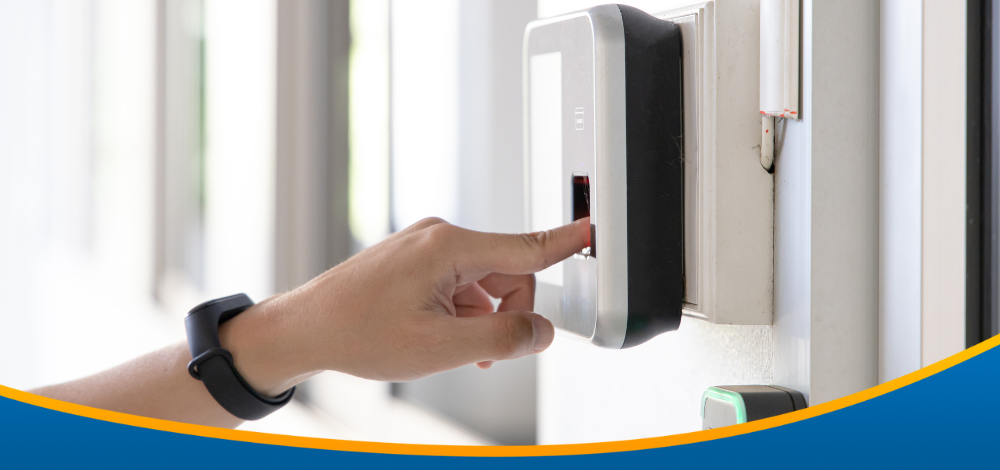
Enrolled users will then scan their fingers onto the machine, and the device will match the information with its saved data. If there’s a match, the system will verify the user’s identity and grant them access to facilities and assets.
Through imaging and algorithm technologies, fingerprint readers can match data at impressive speeds. This advanced capability allows biometric scanning to be completed in seconds, eliminating the possibility of users waiting in line during security checks. The system also streamlines record-keeping, automatically logging people entering a facility or accessing data.
Fingerprint scanners, like other biometric modalities, have false rejection and acceptance rates. This is natural because the machine is continuously learning to compare and match data sets. To address this issue, owners can add another layer of security to their restricted spaces and assets, such as requiring users to enter unique PINs or scan exclusive smart cards as a second identity verification step.
How Do Fingerprint Readers Boost Security in the Workplace
Fingerprint readers as a biometric tool in Philippine businesses aren’t only a means to expedite employee attendance and visitor entry. More importantly, these machines exist to boost workplace safety and security. Below are some of the ways these scanners accomplish this essential task.
Deters Identity Theft and Fraud
Fingerprint biometrics are non-transferable and cannot be guessed, unlike keys, cards, and passwords. As such, bad actors who want to commit fraud will find it challenging to fake this unique human pattern. Spoofing the data is not easy, too, and only a few cybercrime experts may pull it off. Unless the authorized person is coerced into tapping their finger onto the scanner, intruders might find the effort to misuse a fingerprint not worth it.
Identity theft is also difficult if the cybercriminal is accessing digital assets through biometric authentication. Any failed attempt may alert the authentic user and the system administrator, prompting them to block the perpetrator and update their security details.
Performs Accurate Tracking
Biometric fingerprint scanners capture and match input data in seconds, but there’s more to the machine than the speedy granting of access. More importantly, a biometric reader allows fast, accurate activity logs; every individual who taps their fingers onto the machine is recorded in a centralized platform that administrators can review or refer to. In the business setting, this logging system makes attendance monitoring more efficient and audit trails more spot-on.
In addition to being accurate, biometric scanners connected to the monitoring platform allow for convenient documentation of time logs. The system can quickly gather data and create sheets containing crucial information such as dates, times, and ins and outs of users, making activity tracking faster and reporting more streamlined.
Eliminates the Need for Keys and Codes
Opting for fingerprint scanning instead of using keys is a wise move if your business has a history of intruders breaking into your property using a duplicate key. The biometric option should also be more practical if your keypad access control has a record of being hacked, or if you have had an employee who accidentally leaked your facility’s passcode. The biometric solution is not easily duplicated or leaked. Additionally, it requires the authorized person to be present to perform the work. This makes it harder for criminals to approach restricted areas in the dead of the night and tamper with your access control system.
Biometric use also means employees won’t lose their credentials because the information is part of them. Physical items, such as keys, fobs, and cards, meanwhile, are prone to misplacement or loss, resulting in a security concern if the credentials fall into the wrong hands.
Enables Easy System Scaling
Fingerprint scanners are easy to install because they’re not bulky like other access control types. Moreover, they’re cost-effective — one machine can store thousands of individual fingerprints, making one unit sufficient for a small organization on a budget. Moreover, as your business grows, the biometric system can easily grow with you, as the installation of additional fingerprint readers is simple, especially if you’re hiring tech professionals to do the job.
User enrollment for fingerprint readers is also quick and simple. When you hire new employees, you can easily integrate gathering their biometric data into the onboarding process. Thanks to the machine’s advanced image-capturing capabilities, enrolling a fingerprint should not take minutes.
Allows Smooth Hybrid System Integration
Integrating a fingerprint biometric system into your infrastructure is easy, as most systems are compatible with other security solutions. Because of its size and flexibility, a fingerprint reader is particularly easy to adapt to a hybrid system. You can either set it up at the workplace entrance in conjunction with a smart card reader or use a keypad machine with fingerprint authentication as the access control of choice for vaults.
That said, remember to work with experts when integrating fingerprint readers into your operations and infrastructure. Doing so will ensure that the integration is fast and efficient and that the subsequent deployment and implementation are smooth.
Get the Best Fingerprint Reader Biometrics at IOT Philippines
Modern access control is a standard security enhancement in Philippine business spaces, and biometric fingerprint scanners remain one of the most popular system types. However, while in demand, these biometric readers aren’t created equal. To ensure that you’re getting the best machine for your needs, look for biometric system suppliers partnered with reputable manufacturers.
Internet of Things Philippines, Inc. is one of the country’s leading access control system suppliers, with a long list of biometric system brand partners. From HID to IDEMIA, SUPREMA to CMITech, this premier supplier offers the best in biometric technology. Moreover, the vendor will provide recommendations to ensure you get the best system for your unique corporate needs. To learn more about IOT Philippines’ catalog, contact their experts today!
Frequently Asked Questions About Fingerprint Reader Biometrics in the Philippines
Are Fingerprints and Biometrics the Same Thing?
Fingerprints and biometrics are related, but they’re not the same thing. Biometrics are biological characteristics used as credentials for access control and security systems. On the other hand, a fingerprint is one type of biometric. It consists of patterns, including the finger’s ridges and valleys, which are captured and translated into data that a machine will refer to during user identification and authentication.
How Reliable Are Fingerprint Readers?
Fingerprint readers are generally reliable as long as they don’t malfunction or are tampered with. To determine a scanner’s reliability, check its false acceptance rate (FAR) or the percentage of the device identifying an impersonator as the authentic biometric owner. Ideally, your biometric scanner should have only a few or zero false positives.
You can prevent the machine from misidentifying users by inputting a limited amount of information to reduce the number of data points it needs to analyze and compare. Another measure to address the FAR is implementing a second authentication method, such as a unique passcode or a key fob.
How Much Do Fingerprint Readers Typically Cost?
The price of fingerprint scanners in the Philippines typically starts at P5,000, with the exact cost depending on the brand, specifications, and added features. Payment for hiring a third party to install and configure the system will also add to the overall cost of using this device.
Conclusion
The use of fingerprint readers as a biometric system in the Philippines remains popular for business and security purposes because of their simplicity and speed. As such, developments for the machine continue to advance to help keep this access control modality safe and secure.
Like any other biometric technology, fingerprint scanners work by capturing a user’s biological characteristics and inputting this information as a unique code that the system will refer to for future authentication and verification processes. Moreover, like other access control systems, these readers might commit false positives, which requires adding another layer of security to the machine.
Notwithstanding the false acceptance rate, fingerprint readers are essential for workplace security and access control for many reasons, including their capability to deter fraud, track activities accurately, protect facilities and assets without keys, and integrate into existing and upgraded systems for smooth scaling. The key is to get your biometric fingerprint scanners from reputable suppliers like IOT Philippines.
To learn more about our premier brands, contact our experts, and let’s discuss your biometric system needs!
